


Cats make us pause before sharing anything from our plate — and applesauce is one of those foods that feels harmless. But the truth is more complicated than it looks.
When Curiosity Meets Applesauce
Let’s start with the heart of the question.
Yes, cats can safely lick a tiny bit of plain, homemade, unsweetened applesauce once in a while.
But the more honest answer is: they do not need it, and it does not benefit them.
Can Cats Eat Applesauce? (Quick Vet Answer)
Cats can eat a tiny amount of plain, homemade, unsweetened applesauce — but it is still not recommended.
Flavoured, sweetened, or commercial applesauce containing additives should never be given to cats.
“Safe” does not mean “healthy.” It simply means “not toxic in a tiny amount.”
The Hidden Issue: What’s Really Inside Applesauce
We think of applesauce as soft, comforting, and harmless. But many store-bought jars contain:
- preservatives
- acids
- added sugar
- honey
- flavour oils
- spices like cinnamon
- and sometimes, shockingly, sugar substitutes like xylitol (which is deadly to cats)
Suddenly, something simple becomes complicated.
Homemade applesauce is the safest option because it is just apples and water.
But even then, it is not ideal for daily or regular sharing.
How Applesauce Feels Inside a Cat’s Body
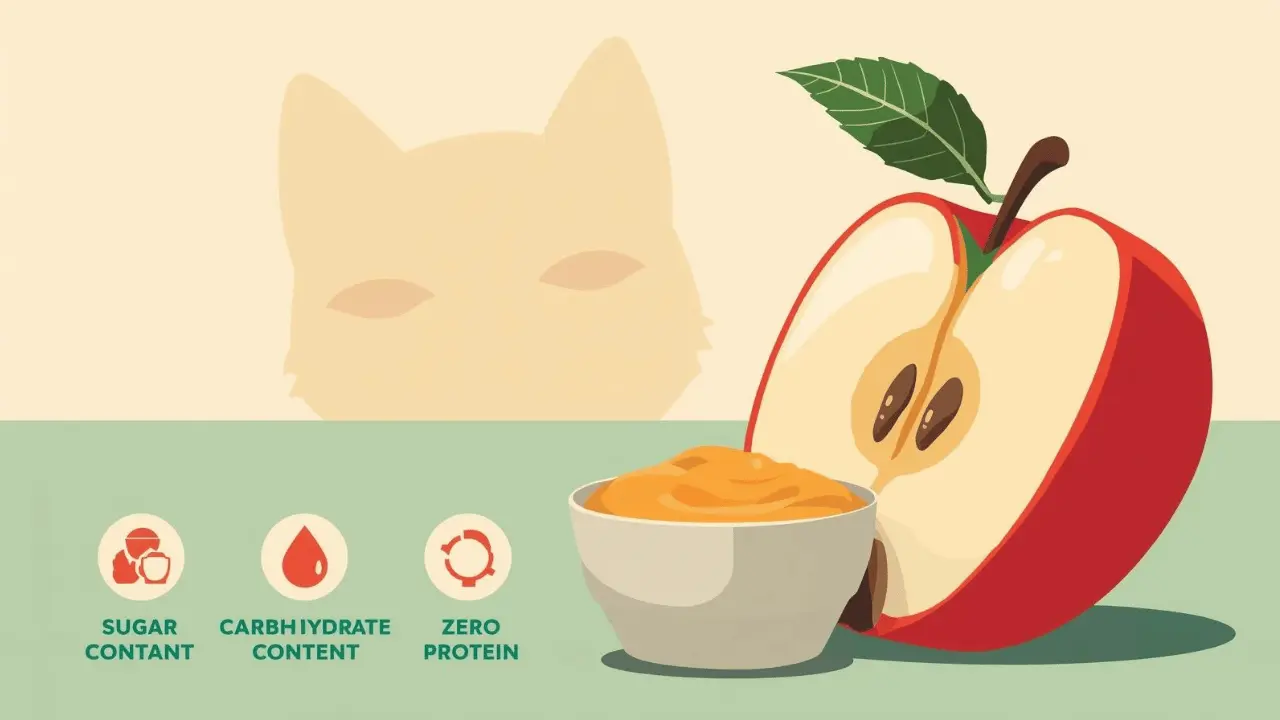
Imagine giving a lion a spoonful of sweet fruit puree. Cute, but unnatural.
A cat’s digestive system is designed like a precision tool for meat:
- strong stomach acid
- short digestive tract
- no taste for sweetness
- limited ability to handle fructose
So when applesauce enters this system, it can lead to:
- soft stools
- gassiness
- mild stomach upset
- brief sugar rush (followed by a sugar crash)
- no nutritional benefit whatsoever
It is not poison.
It is just… unnecessary.
The Real Reason They Are Interested
Cats can not taste sweetness.
Not even a little.
If they seem curious about applesauce, it is not because it tastes good to them.
It’s the smell, the texture, the fact that you are eating it.
Cats express affection by joining your routine.
When they watch you eat, sniff your plate, or tap your arm — it is their way of saying:
“I want to be part of this moment with you.”
They don’t actually want the applesauce.
They want you.
When Applesauce Becomes Dangerous
The biggest danger is not the apple — it is the added ingredients.
Avoid applesauce with:
- Xylitol
- Cinnamon
- Nutmeg
- Added sugar or honey
- Flavoured extracts
- Preservatives like sodium benzoate
- Citrus flavour oils
Even a small amount of these can cause vomiting, drooling, stomach inflammation, or worse.
Can Cats Eat Unsweetened Applesauce?
A small lick of plain, unsweetened applesauce is technically safe, but it’s still not a good idea. Cats get no nutritional benefit from it — and their bodies do not need fruit sugars or fiber. Think of it like offering candy to a lion: not deadly, but not useful either.
If you decide to share:
- Limit it to ¼ teaspoon or less.
- Make sure the only ingredient is apples.
- Offer it only occasionally — maybe once every few weeks.
“Safe” does not mean “healthy.” It just means it likely would not cause harm if it happens once in a while.
What About Cinnamon or Flavoured Applesauce?
This is a gentle but firm no.
Cinnamon contains coumarin, which can irritate the mouth, skin, and internal organs. Nutmeg and flavoured varieties add even more risk.
Symptoms from flavoured applesauce may include:
- Mouth redness
- Drooling
- Soft stools
- Lethargy
- Liver inflammation
Cats should avoid flavoured applesauce entirely.
How Applesauce Affects Cat Digestion
Because cats are built for high-protein diets, giving them fruit-based snacks can easily disrupt their digestive rhythm.
You may see:
- Diarrhea
- Gassiness
- Bloating
- Sugar-induced lethargy
- Temporary loss of appetite
Think of your cat’s stomach as a delicate, meat-processing machine. Applesauce is simply the wrong type of fuel.
Signs Your Cat Did Not Tolerate Applesauce Well
Add this important checklist to help cat parents respond quickly:
- Soft stools within a few hours
- Drooling or unusual swallowing
- Loud stomach gurgling
- Less interest in food
- Sleeping more than usual
- Restlessness or discomfort
If any symptom lasts beyond 12–24 hours, call your veterinarian.
Do Cats Even Like Applesauce?
Interestingly, cats can not taste sweetness at all. Their tongues lack the gene (T1R2) needed to detect sweet flavours.
So if your cat licks applesauce, it’s probably the texture or smell that intrigued them — not the taste. Once curiosity fades, most cats lose interest.
If your cat ignores it, that’s just instinct kicking in. Their bodies know better.
How to Make Safe Applesauce at Home (for the Curious Cat)
Cat-Friendly Applesauce Recipe
Ingredients:
- 1 medium apple (peeled and cored — remove all seeds)
- ¼ cup filtered water
Instructions:
- Chop the apple into small pieces.
- Simmer in water for 8–10 minutes until soft.
- Mash or blend until smooth.
- Let it cool completely before serving.
Serve just a fingertip-sized lick — no more. You can refrigerate the rest to mix with medication if needed.
Why Your Cat Wants What You Are Eating
Cats are social in their own quiet way. They may not share meals like humans, but when they see you eating, they often want to join in as part of bonding behaviour.
When your cat paws at your food or leans close, it’s not always hunger — it’s curiosity and connection. Instead of sharing your meal, offer a cat-safe treat during your snack time. It keeps them included and safe.
How to Safely Introduce Any New Food
Cats do not tolerate sudden diet changes.
Follow this gentle rule:
- Offer only a lick
- Wait 12–24 hours
- Watch for symptoms
- Don’t mix multiple new foods at once
Patience keeps their stomachs settled.
Healthier Cat Snacks Instead of Applesauce
Vet-approved alternatives include:
- Plain cooked chicken or fish
- Plain pumpkin purée
- Tiny cucumber slices
- Soft-cooked carrot bits
- Cat-specific treats designed for digestion
According to PetMD’s feline nutrition guidelines, 90% of a cat’s diet should come from balanced cat food — not human snacks.
And for more insights on what plants and foods to avoid around curious cats, see our guide: Is Mint Plant Toxic to Cats?
Can Kittens Eat Applesauce?
No.
Kittens have extremely sensitive stomachs and developing organs. Even a teaspoon of applesauce can disrupt digestion.
Stick to kitten-formulated foods only.
What To Do If Your Cat Ate Too Much Applesauce
If your cat sneaks more than a few licks, do not panic — just stay observant.
Step 1: Check for harmful ingredients like xylitol, cinnamon, or nutmeg.
Step 2: Offer plenty of fresh water.
Step 3: Watch for vomiting, diarrhea, or lethargy.
Step 4: Call your vet if any symptoms last beyond 12 hours.
Cats are resilient, but quick action helps prevent minor issues from turning serious.
What Veterinarians Say About Cats and Applesauce
Most vets agree that applesauce is non-toxic but unnecessary.
Dr. Rachel Barrack, DVM, reminds pet parents that at least 90% of a cat’s diet should come from balanced cat food to meet essential amino acid needs — especially taurine. Applesauce provides none of these nutrients, making it little more than an empty-calorie curiosity.
It’s fine as a one-time taste test, but not something to repeat.
Common Myths About Cats and Fruit
| Myth | Reality |
|---|---|
| “Cats enjoy sweet treats.” | Cats cannot taste sweetness at all. |
| “Applesauce helps digestion.” | It often causes loose stools. |
| “Fruit fiber is healthy for cats.” | Cats can’t process plant fiber efficiently. |
| “A little every day is fine.” | Even small doses can add unnecessary sugar. |
Author’s Thought
So, can cats eat applesauce?
✔️ Yes — if it’s plain, unsweetened, and offered in a very tiny, occasional amount.
❌ No — if it is flavoured, sweetened, or given regularly.
Applesauce isn’t toxic, but it is not nutritious either. Think of it as a fleeting curiosity — something to sniff once, not a recurring treat.
If you want to show love through food, do it the feline-friendly way: with snacks made for their unique needs.
Frequently Asked Questions
Can kittens eat applesauce?
No. Kittens have even more sensitive stomachs than adult cats. Stick to kitten-formulated food until they’re fully grown.
Can cats eat apple slices instead of applesauce?
A small piece of peeled apple (no seeds or core) is safer than applesauce, but it still offers no nutritional value.
Can applesauce be used as a medicine or supplement for cats?
A small lick is unlikely to cause harm, but repeated exposure can irritate their liver or mouth.
Are apples toxic to cats?
The fruit itself isn’t, but apple seeds contain cyanide compounds and should never be ingested.
How much applesauce is too much?
Anything more than a ¼ teaspoon is unnecessary and risky. Cats don’t digest sugar well, so moderation is crucial.
Your cat doesn’t need sweet treats — they need your presence, routine, and affection.

2 thoughts on “Thinking of Feeding Your Cat Applesauce? Here is the Safe, Loving Answer”