
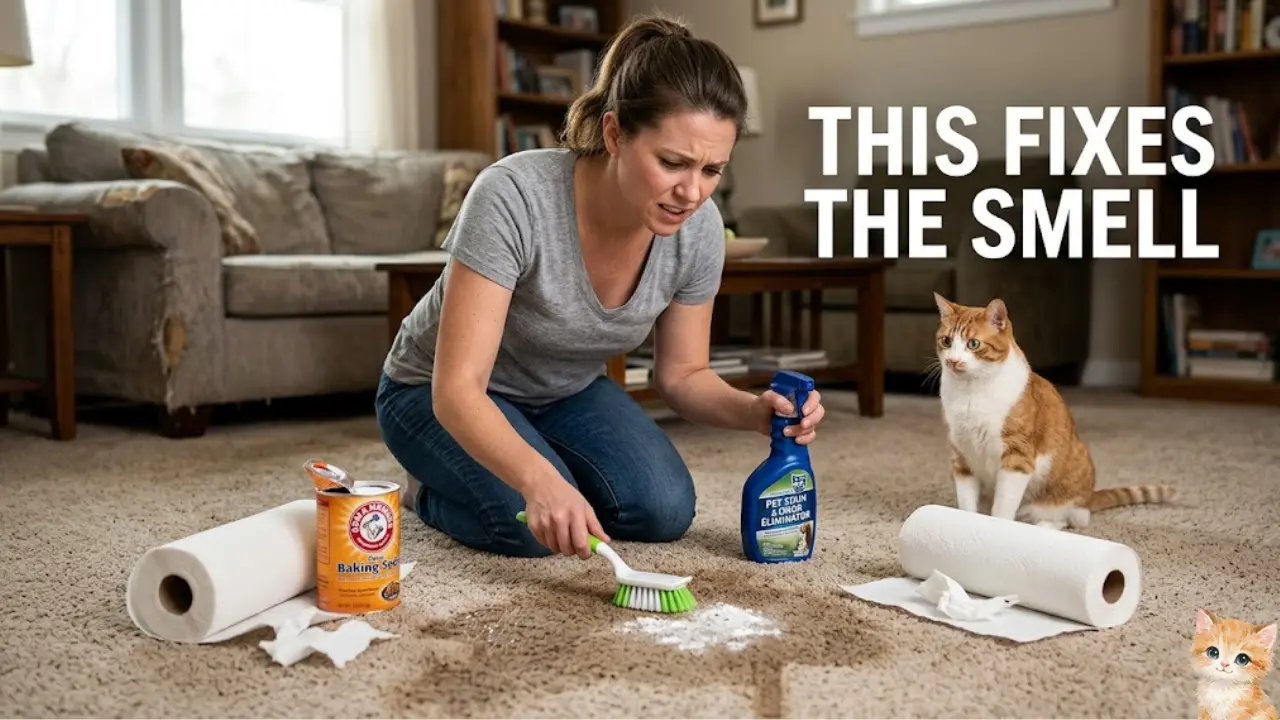

Cat pee smell is one of the hardest household odors to remove because it does not just stay on the surface. It sinks deep into carpet, furniture, bedding and even wood, which is why the smell often comes back even after cleaning. This guide explains how to get rid of cat pee smell properly, what products work best and how to stop the odor from returning.
The good news is that cat urine odor can usually be removed when the right method is used. The key is not covering the smell. The real goal is breaking down what causes it, cleaning deeply and making sure the odor does not keep pulling your cat back to the same place.
Why Cat Pee Smell Is So Strong
What makes cat urine smell so bad
Cat urine has a very strong chemical makeup. Fresh urine may smell unpleasant, but older urine smells much worse because it begins to break down over time. As it dries, bacteria start working on it and the odor becomes sharper and more concentrated.
One of the main reasons the smell lingers is uric acid. That is the part that sticks to surfaces and keeps releasing odor especially when the weather is humid or the room gets warm. Even when a stain seems gone, those crystals can stay behind and reactivate later.
Why regular cleaning often does not work
A lot of people clean cat pee the same way they clean other spills. They wipe it, spray a regular cleaner and assume the problem is solved. But normal cleaners often only freshen the surface for a short time.
The deeper odor remains trapped underneath. On soft materials like carpets, mattresses and couches, urine can sink below the top layer and settle where a basic surface wipe can not reach. That is why the smell often returns after a few hours or days.
Act Fast Before the Smell Sets In
Why immediate cleaning matters
The sooner cat pee is cleaned, the easier it is to remove. Fresh urine has not had as much time to soak in, dry out, and form stubborn odor-causing residue. Quick action can make the difference between a simple clean-up and a deep odor problem that lasts for weeks.
Fast cleaning also matters because cats are very sensitive to scent. If they still smell urine in one area, they may think it is an acceptable bathroom spot and return there again.
What to do first
Start by blotting the area with paper towels or a clean, dry cloth. Press down firmly to absorb as much liquid as possible. Do not rub, because rubbing spreads the urine and pushes it deeper into the material.
Keep blotting until the surface feels much drier. This first step is simple, but it removes a large amount of the problem before any cleaning product is even used.
Supplies Needed to Remove Cat Pee Smell
Basic cleaning items
A few basic items make the job easier. Paper towels or absorbent cloths are useful for blotting. Cold water helps rinse fresh urine without setting the stain. Gloves can make the cleanup more hygienic, and a spray bottle helps apply cleaning solutions evenly.
A soft brush can be helpful on sturdy fabrics, though gentle handling is important so the stain is not spread deeper into the material.
Best odor-fighting products
The most effective product for cat urine is usually an enzymatic cleaner. These cleaners are designed to break down the compounds in urine instead of simply masking them. That makes them much better for stubborn pet odors than standard household sprays.
Baking soda can help absorb lingering smell after the main cleaning step is done. White vinegar is often used as a temporary odor neutralizer for fresh stains. Laundry detergent is useful for washable fabrics and a wet vacuum can help remove moisture from carpets after treatment.
What not to use
Some cleaning products actually make the problem worse. Ammonia-based cleaners should be avoided because ammonia smells similar to urine and may encourage a cat to mark the area again.
Steam cleaning untreated urine stains can also be a mistake. Heat can lock the odor into the fibers and make the smell harder to remove. Strong perfumes are another poor solution because they only cover the odor for a while and do not solve the real issue underneath.
Also Read: Orange Cat Personality: Myths and the Truth About Their Behaviour
How to Get Rid of Cat Pee Smell Step by Step
Step 1: Blot the urine
The first step is absorbing as much urine as possible. Use paper towels or a cloth and press down repeatedly. Stand on the towels for carpet if needed to pull more liquid out from below the surface.
This step matters because every bit of moisture removed early reduces how much urine remains to dry and leave odor behind.
Step 2: Rinse with cold water
After blotting, use a small amount of cold water to lightly rinse the area. This helps dilute what is left. Then blot again with fresh towels.
Do not soak the area unnecessarily. Too much water can spread the stain wider, especially on carpets and upholstery. The goal is a controlled rinse, not flooding the spot.
Step 3: Apply an enzymatic cleaner
Once excess moisture is removed, apply an enzymatic cleaner according to the label directions. This is the stage that targets the real source of the smell. The cleaner needs enough contact with the stained area to reach the urine residue and break it down.
Let the treated spot sit for the recommended amount of time. Do not rush this step. Many people wipe the product away too quickly and then wonder why the odor remains. After treatment, allow the area to air dry fully.
Step 4: Use baking soda after drying
When the area is mostly dry, baking soda can be sprinkled over the spot to absorb any remaining odor. Let it sit for several hours or overnight if possible.
Once the area is fully dry, vacuum it up thoroughly. This final step can make the room smell much fresher, especially on soft surfaces.
How to Remove Cat Pee Smell From Different Surfaces
Carpet
Carpet is one of the hardest surfaces to treat because urine often sinks into the padding underneath. Blot first, rinse lightly if needed and then apply enough enzymatic cleaner to reach below the fibers.
Let the carpet dry completely before deciding whether the smell is gone. A carpet can seem clean while still holding odor deeper inside. In severe cases, the padding may also need treatment.
Mattress
A mattress absorbs liquid quickly, so speed matters even more. Blot the area right away, then apply a pet-safe enzymatic cleaner carefully so it reaches the affected section without soaking the entire mattress.
After that, sprinkle baking soda over the surface once it begins drying. Leave it for several hours, then vacuum thoroughly. Good airflow is important, so keeping the mattress in a well-ventilated room helps.
Couch or upholstery
Couches and upholstered chairs need a gentler approach. Blot first, then test any cleaner on a hidden area to make sure it does not damage the fabric. Apply the cleaner carefully and avoid oversaturating the cushion.
Allow the upholstery to dry completely. Fans can help speed this up. If the cushion has a removable cover, follow the care label before washing.
Hardwood floors
Cat urine on hardwood can become a bigger issue if it seeps into cracks or under the boards. Wipe it up immediately and clean the surface with a product that is safe for sealed wood.
If the odor remains after cleaning, the urine may have reached beneath the finish or into gaps between planks. In that case, deeper treatment may be needed.
Clothes and bedding
Washable items should be rinsed in cold water first. Then wash them with regular detergent and, if suitable an odor-removing laundry additive. Check the item carefully before drying it.
Do not put it in the dryer while the smell is still there. Heat can lock the odor into the fabric and make it much harder to remove later.
How to Find Hidden Cat Pee Spots
Signs there may be hidden urine
Sometimes the smell remains even after the obvious stain is cleaned. That usually means there is another spot somewhere in the room. You may notice the odor is stronger near a wall, under furniture, or around a rug edge.
Another clue is when a cat keeps going back to a certain part of the room. That often means there is still a lingering scent there, even if it is not easy for humans to see.
Ways to locate the source
A simple smell check can help narrow down the area. Focus on corners, baseboards, rugs, behind furniture and soft surfaces where urine can soak in unnoticed.
A UV black light is especially useful for dried cat urine. It can reveal hidden spots that look invisible in normal lighting. This is often the easiest way to find the real source of a stubborn smell.
Natural Remedies for Cat Pee Smell
Vinegar and water solution
A vinegar and water mix is a common home remedy for fresh cat urine. It can help reduce odor on the surface and is useful when nothing else is immediately available.
Still, vinegar does not work as deeply as an enzymatic cleaner. It may help with early cleanup, but it is usually not the best long-term solution for older or stronger urine smells.
Baking soda for odor absorption
Baking soda is one of the most useful natural helpers for odor control. It can absorb some of the remaining smell after the main cleaning is done and can make the area feel fresher.
It works best as a follow-up step, not as the main treatment. Sprinkling baking soda over untreated urine usually is not enough to solve the whole problem.
When natural methods are not enough
Natural remedies can help with light or fresh accidents, but deeper stains usually need stronger treatment. If the urine has dried, soaked into carpet padding or been left for days, home remedies may only improve the smell rather than remove it fully.
That is when enzyme-based products or professional cleaning become much more useful.
Common Mistakes That Make Cat Pee Smell Worse
Rubbing the stain
Rubbing seems like a natural reaction, but it spreads the urine and forces it deeper into carpet or fabric. Blotting is always better than scrubbing during the early stage.
Using hot water
Hot water can set odor into fibers and make the smell harder to remove. Cold water is safer for early cleanup and basic rinsing.
Using ammonia cleaners
Because ammonia resembles the smell of urine, a cat may react badly to it and return to the same place. That makes it one of the worst choices for pet accidents.
Not cleaning the padding underneath
This is one of the biggest reasons the smell keeps coming back. The top of the carpet may be clean, but the padding underneath still holds urine. In those cases, the problem is not really solved until the lower layer is treated too.
How to Stop the Smell From Coming Back
Clean deeply the first time
Do not stop cleaning just because the stain is no longer visible. Cat urine problems are about odor more than appearance. A surface that looks clean can still hold enough scent for a cat to notice.
Deep cleaning the first time saves time later and lowers the chance of repeat accidents.
Block repeat marking
Once the spot is cleaned, keep the cat away from that area until it is fully dry and odor-free. Some pet owners temporarily cover the area or rearrange furniture to break the habit.
A clean litter box also helps. If the box is dirty, badly placed or stressful for the cat to use, accidents are more likely to happen again.
Check for medical or behavioral causes
If a cat starts peeing outside the litter box repeatedly, the issue may not be cleaning alone. Urinary problems, stress, territorial behavior or litter box dissatisfaction can all play a role.
When accidents continue, it is wise to consider whether there is a health or behaviour issue that needs attention.
When to Call a Professional
Signs home cleaning may not be enough
Some situations are too deep or too widespread for simple home treatment. If the odor remains strong after repeated cleaning or if urine has soaked into subflooring, walls, or multiple old spots, professional help may be the better option.
This is especially true in homes with long-term repeated marking or hidden stains that keep reappearing.
What professionals can do
Professional cleaners often have stronger extraction tools and specialized pet odor treatments. They can clean more deeply than most home methods and may be able to assess whether carpet padding or subflooring has been affected.
That can be the difference between temporary improvement and true odor removal.
Tips to Keep Your Home Smelling Fresh After Cleanup
Improve ventilation
Fresh air makes a big difference during cleanup. Open windows, use fans and let treated areas dry thoroughly. Damp surfaces tend to hold odor longer, so airflow helps both freshness and drying.
Keep litter areas clean
Cats are much more likely to use a litter box consistently when it is clean. Scoop it daily, wash it regularly and make sure the litter type works for your cat.
A clean litter area supports better habits and reduces future accidents in the house.
Monitor your cat for repeat accidents
Pay attention after cleanup. If your cat returns to the same spot or starts peeing in new areas, that is a sign the issue is not fully solved yet. The smell may still be there or there may be a deeper behavioural or medical reason.
Catching the pattern early makes it much easier to stop.
Removing cat pee smell takes more than a quick wipe and a nice-smelling spray. The odor is stubborn because it clings deep inside surfaces and keeps reappearing when it is not cleaned properly. But with quick action, the right products and deeper treatment where needed, the smell can usually be removed for good.
The most important thing is to deal with the real source of the odor, not just what is on the surface. Once that is done, the room smells better and the chance of your cat returning to the same spot becomes much lower.
FAQ Section
What is the best thing to remove cat pee smell?
The best thing to remove cat pee smell is an enzymatic cleaner because it breaks down the urine compounds that cause lingering odor.
Does vinegar remove cat pee smell?
Vinegar may help reduce fresh cat urine odor, but it usually does not remove deep or old smells as effectively as an enzymatic cleaner.
Why does cat pee smell come back after cleaning?
The smell often returns because urine soaked below the surface into carpet padding, upholstery, wood or other hidden areas.
Can baking soda remove cat pee smell?
Baking soda can help absorb lingering odor after cleaning, but it usually works best as a follow-up step rather than the main solution.
How do you get cat pee smell out of carpet?
Blot the area, rinse lightly with cold water, apply an enzymatic cleaner deeply enough to reach the padding, let it dry and vacuum baking soda if needed.
