
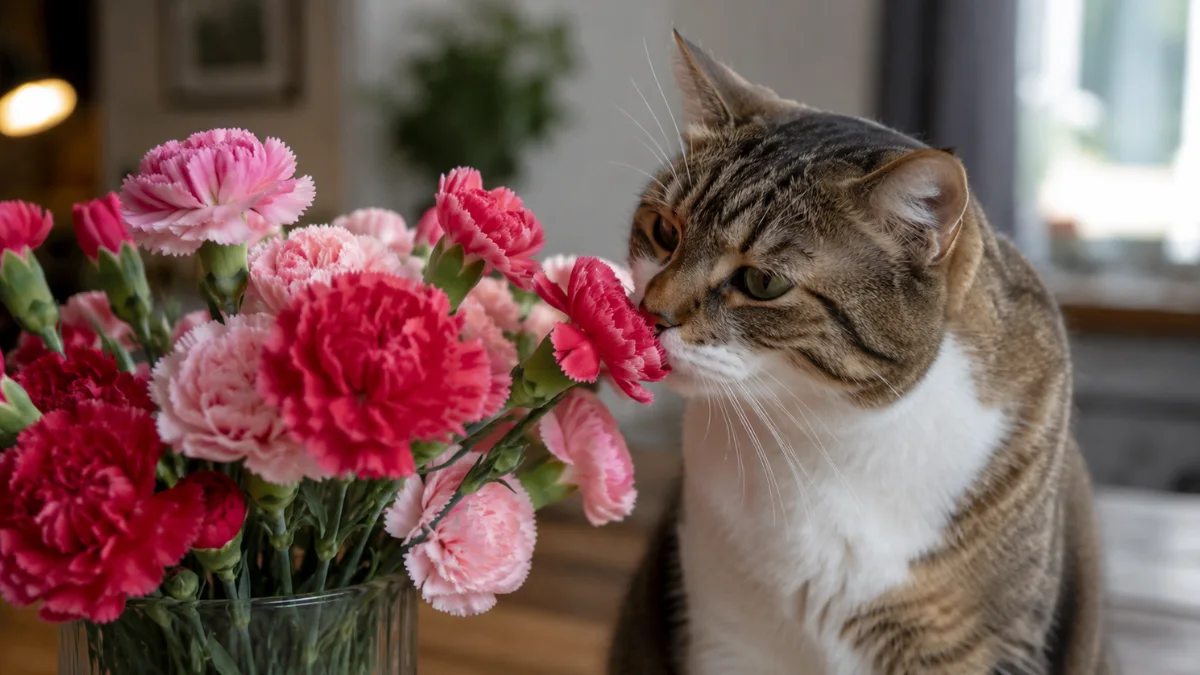

Yes, carnations are toxic to cats. They usually cause mild gastrointestinal problems or mild skin irritation rather than severe organ damage.
Remove the flower as soon as the cat chews or contacts it. Check the entire bouquet for other plants, identify how much may have been swallowed and contact a veterinarian when symptoms appear or the exposure is uncertain.
Mixed bouquets require particular caution because they may contain true lilies, which are far more dangerous to cats than carnations.
Are Carnations Toxic to Cats?
The ASPCA classifies carnations as toxic to cats, dogs and horses.
The common carnation has the scientific name Dianthus caryophyllus. It may also appear under names such as pinks or wild carnation.
The precise substance responsible for carnation toxicity remains unidentified. It is described as an unknown irritant that may cause mild gastrointestinal signs or mild dermatitis.
Carnations therefore should not be considered safe flowers for a home with cats. A cat may become exposed by chewing the flower, playing with fallen plant material or rubbing against the plant.
The expected reaction is generally milder than the poisoning caused by highly dangerous plants such as true lilies. However, an owner should still take the exposure seriously because the amount swallowed and the exact flowers in an arrangement may not be clear.
What Symptoms Can Carnations Cause in Cats?
Carnation exposure is mainly associated with mild digestive problems and mild skin irritation.
Possible digestive symptoms include:
- Vomiting
- Diarrhea
- Reduced appetite
- Signs of stomach discomfort
A cat may also develop dermatitis after direct contact with the plant. Dermatitis means inflammation or irritation of the skin.
Possible signs of skin discomfort may include increased licking, scratching or visible redness. These signs are not unique to carnation exposure, so a veterinarian should assess persistent or worsening irritation.
Not every cat will show obvious symptoms after contact with a carnation. A cat may appear normal after a small exposure, but that does not confirm that the plant is safe or that no material was swallowed.
The exact reaction cannot be predicted from the size of a bite mark alone. The veterinarian may also need to consider the cat’s age, health, symptoms and possible exposure to other flowers.
Are Carnations Deadly to Cats?
Carnations are generally associated with mild clinical effects rather than severe poisoning or organ failure.
However, “mildly toxic” does not mean that every exposure can safely be ignored. Vomiting and diarrhea can become more concerning when they continue, prevent the cat from drinking or occur in a kitten, elderly cat or cat with an existing medical condition.
The exposure also becomes more serious when:
- The amount eaten is unknown
- A large section of the plant appears to be missing
- The cat has repeated access to the flowers
- Symptoms continue or worsen
- The flower cannot be identified confidently
- Several types of flowers were present
- The cat may have swallowed ribbon, wire or wrapping
- The arrangement may contain lilies
Do not assume that a cat only contacted the carnation because that was the flower seen in its mouth. The cat may have chewed another flower or drunk from the vase before being noticed.
What Should You Do If Your Cat Ate a Carnation?
Remove access to the plant and gather information about the exposure.
Do not begin home treatment or try to make the cat vomit. A veterinarian or animal poison service should decide whether any treatment is necessary.
Remove the Complete Flower Arrangement
Move the full bouquet to a room that the cat cannot enter.
Collect fallen petals, leaves and broken pieces from the floor, furniture and surrounding area. Check beneath tables and other nearby objects where pieces may have landed.
Secure the rubbish bin if damaged flowers have already been discarded. Cats may investigate the bin and gain access to the plant again.
Do not remove only the chewed carnation while leaving the rest of the bouquet accessible.
Identify Every Plant in the Bouquet
Confirm that the flower is genuinely a carnation.
Save any florist label, plant tag, receipt or packaging. Take clear photographs of the:
- Flower
- Leaves
- Stems
- Entire arrangement
- Plant label
Common plant names can be misleading. A photograph of the complete plant gives a veterinarian more useful information than a close-up of one damaged petal.
Ask the florist for a complete list of flowers and decorative greenery when the arrangement contains several species.
Estimate the Exposure
Try to determine:
- What part of the arrangement the cat contacted
- Whether the cat chewed or swallowed plant material
- How much appears to be missing
- When the exposure occurred
- Whether the cat drank from the vase
- Whether symptoms have started
An exact measurement is not necessary. A reasonable estimate can help the veterinarian evaluate the situation.
Do not delay the call because the amount cannot be determined precisely.
Observe the Cat Carefully
Watch for vomiting, diarrhea, appetite changes, unusual tiredness or signs of skin irritation.
Continue monitoring the cat even when it initially appears normal. Do not rely on a fixed online symptom timeline because individual exposures differ.
Keep the cat indoors and nearby so changes are easier to notice. Make sure fresh drinking water remains available but do not force the cat to drink.
When Should You Contact a Veterinarian?
Contact a veterinarian after suspected carnation ingestion when the amount, plant identity or level of exposure is uncertain.
Prompt veterinary advice is especially important when:
- Vomiting or diarrhea develops
- Symptoms continue or become worse
- The cat refuses food or water
- The cat appears weak or unusually quiet
- Visible skin irritation develops
- A large or unknown amount may have been swallowed
- The bouquet contained unidentified flowers
- The cat drank from the vase
- The cat is a kitten or senior
- The cat has an existing health condition
A veterinarian may advise home observation after evaluating a minor exposure. That decision should depend on the individual case rather than a general assumption that carnations only cause mild effects.
Readers in the United States may also contact the ASPCA Animal Poison Control Center. A consultation fee may apply. Readers elsewhere should contact a local veterinarian, emergency animal hospital or animal poison service.
The broader guide explaining what is toxic to cats covers other dangerous plants, foods, medicines and household products.
What If the Bouquet Also Contains Lilies?
Possible true-lily exposure is an immediate veterinary emergency.
True lilies from the Lilium family and daylilies from the Hemerocallis family can cause fatal kidney failure in cats. Exposure may occur when a cat:
- Chews a leaf or flower
- Swallows a small piece of a petal
- Licks pollen from its coat
- Walks through fallen pollen and later grooms
- Drinks water from a vase containing lilies
A cat does not need to eat an entire lily to become seriously ill. Even a small exposure may be dangerous.
Contact a veterinarian or pet poison service immediately when lilies may have been present. Do not wait for symptoms to develop.
Take the plant, label or clear photographs to the veterinary clinic. Early treatment greatly improves the chance of a better outcome.
Carnations are not known to cause the same kidney failure. The warning is necessary because florists frequently combine several flower species in one arrangement.
What Should You Not Do After Carnation Exposure?
Do not try to make the cat vomit at home.
There is no safe household method for inducing vomiting in cats. Hydrogen peroxide can irritate and injure a cat’s stomach and oesophagus.
Do not give the cat:
- Hydrogen peroxide
- Salt
- Cooking oil
- Mustard
- Milk as a treatment
- Activated charcoal without veterinary direction
- Human medicine
Do not push a finger, spoon or another object into the cat’s throat. This can cause injury and may result in a serious bite.
Do not force water into the cat’s mouth. Forced liquid can enter the airways, especially when the cat struggles.
Do not apply human creams, essential oils or disinfectants to irritated skin without veterinary instructions. Cats may lick the product from their coat and swallow ingredients that are unsafe for them.
The safest action is to remove the plant, identify the exposure and follow professional advice.
Can Touching Carnations Irritate a Cat?
Yes, contact with carnation plant material may cause mild dermatitis.
A cat may brush against the plant while walking past a bouquet or rub its face and body against the stems and flowers. Plant material may also remain on the coat and later be swallowed during grooming.
Remove the arrangement when the cat has been rubbing against it. Prevent further contact and observe the skin and coat.
Contact a veterinarian when the cat develops visible irritation, continues licking one area or appears uncomfortable. Veterinary advice is also appropriate when plant material enters the eyes.
Do not wash the cat with a household cleaning product. A veterinarian can advise whether the coat needs to be rinsed and which method is appropriate.
Is Carnation Vase Water Safe for Cats?
Cats should not drink water from a flower vase.
Carnation-specific evidence does not establish that ordinary carnation vase water causes severe poisoning. However, vase water may contain fallen plant material, bacteria, flower preservatives and residue from other plant species.
The contents become especially dangerous when the bouquet contains true lilies because lily vase water can expose a cat to the toxin associated with kidney failure.
Move flower arrangements away from food and water bowls. Provide fresh water in the cat’s normal bowl and clean any spilled vase water immediately.
A narrow vase opening does not guarantee safety. Cats may knock the arrangement over or drink from water spilled onto a table or floor.
Are Dried Carnations Safe for Cats?
Dried carnations should still be kept away from cats.
There is not enough reliable evidence to declare dried carnation material harmless. Dry stems and petals may break into small pieces that a cat can chew or swallow.
Dried arrangements may also contain:
- Wire
- Ribbon
- Glue
- Artificial fragrance
- Paint
- Preservative products
- Other unidentified plants
These materials create risks that are separate from carnation toxicity.
Potpourri and scented flower arrangements deserve particular caution because they may contain concentrated fragrance oils or other added chemicals.
How Can Carnation Exposure Be Prevented?
The most reliable approach is to avoid keeping carnations where a cat can reach them.
A high shelf does not always provide protection. Cats can jump, climb and knock over objects that appear inaccessible.
Use these precautions:
- Check every flower before bringing it home
- Ask florists to exclude carnations and true lilies
- Inspect gift bouquets immediately
- Verify plants by scientific name
- Avoid arrangements containing unidentified greenery
- Keep vase water inaccessible
- Remove fallen petals and leaves
- Secure ribbon, wrapping and floral wire
- Place discarded flowers in a closed bin
- Tell visitors that the home contains a cat
Do not assume a flower is safe because it is described as natural, organic or pet-friendly. Verify the exact species through a reliable animal-toxicity resource.
A cat that ignored a bouquet previously may investigate it later. Past disinterest does not guarantee continued safety.
What Is the Safest Response?
Carnations are toxic to cats, but the recognised effects are generally mild gastrointestinal signs and mild dermatitis.
Remove the entire arrangement, identify all included flowers and collect information about the exposure. Do not induce vomiting or use household remedies.
Contact a veterinarian when symptoms appear, the amount is uncertain or the bouquet contains unidentified plants. Treat any possible true-lily exposure as an immediate emergency.
Frequently Asked Questions
Will one bite of a carnation harm a cat?
A small bite may cause no visible reaction or may lead to mild digestive problems. Remove the flower and contact a veterinarian when the amount, plant identity or exposure is uncertain.
What part of a carnation is toxic?
The responsible irritant has not been identified, and reliable guidance does not isolate one harmless part of the plant. Prevent cats from chewing the flowers, leaves and stems.
How long after eating a carnation will a cat show symptoms?
There is no dependable carnation-specific timeline that applies to every cat. Monitor the cat and contact a veterinarian when symptoms develop rather than waiting for a particular number of hours.
Should a cat visit a veterinarian after eating a carnation?
Veterinary advice is appropriate when symptoms appear, the quantity is unknown, the plant cannot be confirmed or other flowers were present. The veterinarian can determine whether home observation or examination is appropriate.

2 thoughts on “Are Carnations Toxic to Cats? Symptoms and What to Do”