
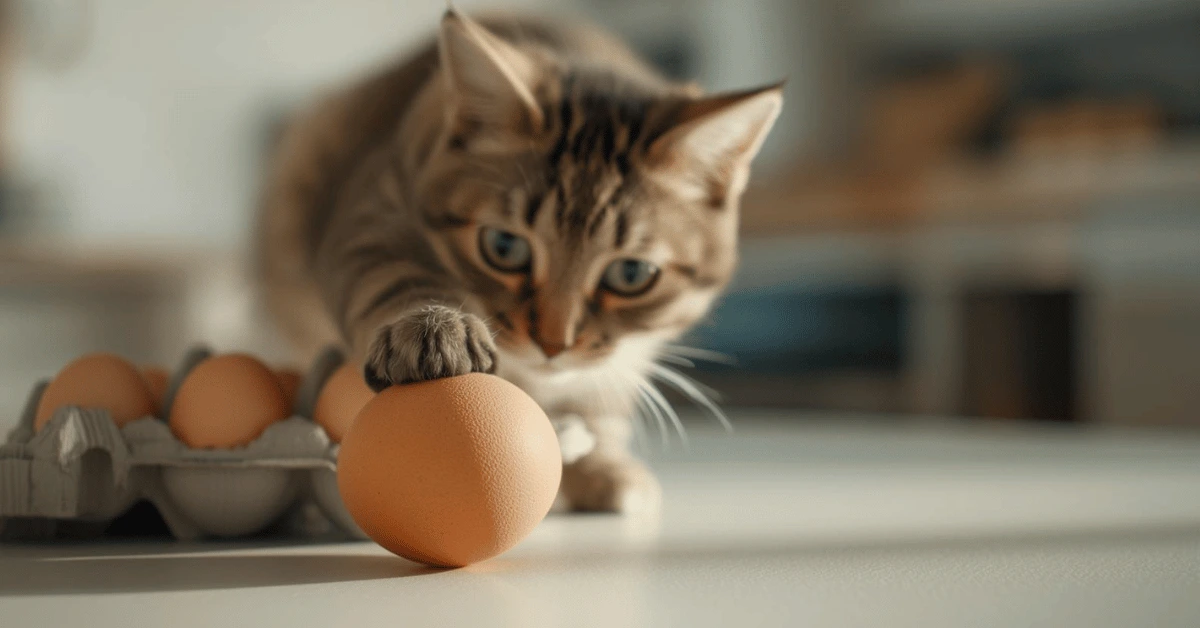

Cats should not intentionally eat raw eggs. Uncooked eggs may carry harmful bacteria, while repeatedly eating raw egg white can interfere with the body’s ability to use biotin.
A small accidental lick does not mean that a cat will definitely become ill. Remove the remaining egg, clean the contaminated area and monitor the cat for vomiting, diarrhoea, appetite changes or unusual tiredness.
Contact a veterinarian when the cat eats a large amount, develops symptoms or belongs to a vulnerable group such as kittens, elderly cats or cats with existing medical conditions.
Why Raw Eggs Are Not Recommended for Cats
Eggs contain protein, fat and several nutrients, but cats do not need to consume them raw. Complete and balanced cat food already provides the nutrients a healthy cat needs in appropriate proportions.
The main concern involves bacterial contamination. An egg may carry harmful organisms even when the shell looks clean and undamaged.
A cat that consumes contaminated egg may develop digestive illness. Some exposed cats may also carry bacteria without showing obvious symptoms, which can create a hygiene risk for other animals and people in the household.
Cooking the egg thoroughly reduces the bacterial risk and makes it a safer occasional treat.
Bacterial Risks From Raw Eggs
Raw eggs may expose cats to disease-causing bacteria such as Salmonella. Not every exposed cat becomes sick, but illness may affect kittens, elderly cats and medically fragile animals more severely.
Possible symptoms include:
- Vomiting
- Diarrhoea
- Reduced appetite
- Unusual tiredness
- Fever
- Abdominal discomfort
- Dehydration
- Blood in the stool
These symptoms can have many possible causes. A veterinarian may need to examine the cat and review its recent diet before identifying the problem.
Do not assume that every episode of vomiting or diarrhoea comes from the raw egg. However, mention the exposure when contacting the veterinary clinic.
Are Raw Egg Whites Dangerous for Cats?
Raw egg white contains avidin, a protein that binds to biotin, also known as vitamin B7. Biotin supports normal metabolism, skin and coat health.
Repeatedly feeding large amounts of raw egg white can reduce the amount of biotin available to the body. This nutritional problem develops through continued exposure rather than one small accidental lick.
The more immediate concern after a single exposure involves possible bacterial contamination or digestive upset.
Raw egg white should not become a regular food topper, supplement or treat.
Can Cats Eat Raw Egg Yolk?
Raw egg yolk contains less avidin than the white, but it still comes from an uncooked egg and may carry harmful bacteria.
Separating the yolk from the white does not remove the food-safety concern. Egg yolk also contains considerable fat and calories for a small animal.
Cats eating complete and balanced food do not need raw egg yolk as a nutritional supplement.
Can Cats Eat a Whole Raw Egg?
Cats should not receive a whole raw egg as a meal or regular treat.
A chicken egg can add a large number of unnecessary calories to a cat’s daily intake. It may also disturb the balance of the normal diet while introducing avoidable bacterial risk.
Protein content alone does not make a food suitable for cats. They require the correct overall balance of protein, fat, vitamins, minerals and other nutrients.
What to Do If Your Cat Ate Raw Egg
Stay calm and remove the remaining egg so the cat cannot consume more.
Try to estimate how much the cat ate. One small lick creates a different level of concern than eating an entire egg or a dish containing several ingredients.
Check whether the egg was plain or mixed with onion, garlic, chocolate, alcohol, raw dough, seasoning or other potentially unsafe foods. Review What Is Toxic to Cats? when the exposure involves another ingredient.
Clean bowls, utensils, counters and flooring that contacted the raw egg. Wash your hands thoroughly with soap and water.
Monitor the cat’s appetite, energy, stool and behaviour over the following days. Do not give human medicine or attempt to make the cat vomit unless a veterinarian provides direct instructions.
Contact a veterinarian when:
- The cat ate a large or unknown amount
- The egg contained another unsafe ingredient
- The cat is a kitten, elderly or medically fragile
- Vomiting or diarrhoea develops
- The cat refuses food
- The cat becomes unusually weak or quiet
- Blood appears in vomit or stool
- The cat cannot keep water down
- Symptoms continue or become severe
A photograph of the food, packaging or ingredient list may help the veterinary team assess the exposure.
Is One Lick of Raw Egg an Emergency?
One small lick of plain raw egg is not usually an immediate emergency for an otherwise healthy adult cat.
However, no one can determine by looking at an egg whether it carries harmful bacteria. Remove the egg, clean the area and monitor the cat carefully.
Contact a veterinarian sooner when the cat is very young, elderly, already unwell or showing symptoms.
How Long Should You Monitor the Cat?
Continue watching the cat closely over the following days. Pay attention to appetite, energy, bowel movements and vomiting.
Do not wait for symptoms to become severe before asking for veterinary advice. Early guidance matters when a vulnerable cat becomes unwell or repeatedly vomits.
A cat behaving strangely after a meal may also be showing a harmless routine rather than illness. Why Does My Cat Act Weird After Eating? explains how to separate common post-meal habits from warning signs.
Are Cooked Eggs Safer for Cats?
Fully cooked plain egg is safer than raw egg because thorough cooking reduces the risk from harmful bacteria.
The egg white and yolk should be completely firm. Do not serve runny, soft or partially cooked egg.
Cooked egg should remain an occasional treat rather than a regular meal. It cannot replace complete and balanced cat food.
Avoid serving eggs prepared with:
- Salt
- Butter
- Cooking oil
- Milk or cream
- Cheese
- Onion
- Garlic
- Sauces
- Seasoning
- Processed meat
A small bite is enough for most cats. A whole egg would provide an unnecessarily large treat for many cats.
For more preparation-specific guidance, link to 10 Egg-Based Dishes Cats Can or Cannot Eat Safely.
Can Cats Eat Pasteurised Raw Egg?
Pasteurisation reduces bacterial risk, but it does not make raw-style egg necessary for cats.
Some pasteurised egg products contain salt, preservatives, flavourings or other added ingredients. Check the complete ingredient list before considering any packaged egg product.
Complete commercial cat food remains a safer and more dependable nutritional choice than adding egg products without professional guidance.
Why Household Hygiene Matters
Raw egg can spread bacteria to hands, countertops, bowls, utensils and other food.
A cat may also transfer contamination after eating by licking its fur, walking across surfaces or using the litter tray.
After an accidental spill:
- Wash your hands thoroughly
- Clean contaminated surfaces
- Wash the cat’s food bowl
- Dispose of the remaining raw egg securely
- Keep the cat away from human food-preparation areas
- Clean the litter tray regularly
- Wash your hands after handling waste
Extra caution matters in homes with young children, pregnant people, older adults or anyone with a weakened immune system.
Common Myths About Raw Eggs and Cats
Raw Egg Gives Cats a Shinier Coat
Cats do not need raw egg for healthy skin or fur. Coat condition depends on balanced nutrition, grooming, parasite control and general health.
Complete cat food provides a safer nutritional foundation than an unmeasured raw ingredient.
Wild Cats Eat Raw Food, So Raw Egg Must Be Safe
Domestic cats require animal-based nutrients, but that does not make every uncooked animal product safe.
Raw eggs can introduce bacteria into the cat and the household. Natural feeding behaviour does not remove that risk.
Organic Eggs Cannot Carry Bacteria
Organic, free-range or clean-looking eggs may still carry harmful bacteria.
Production labels do not guarantee that an uncooked egg is free from pathogens. Thorough cooking remains the safer choice.
Raw Egg Is a Good Protein Supplement
Healthy cats eating complete food normally do not need an extra protein supplement.
Adding eggs, meat, fish or other foods without measuring them can increase calories and disturb the nutritional balance of the regular diet. 6 Cat Feeding Mistakes Most Owners Make can support this section through a natural internal link.
When Cooked Egg Should Also Be Avoided
Even plain cooked egg may not suit every cat.
Ask a veterinarian before offering egg to a cat with:
- Food allergies
- Pancreatitis
- Obesity
- Diabetes
- Kidney disease
- Digestive illness
- A prescribed therapeutic diet
Stop offering egg when the cat develops vomiting, diarrhoea, itching or another unusual reaction.

2 thoughts on “Can Cats Eat Raw Eggs? Risks and What to Do”