
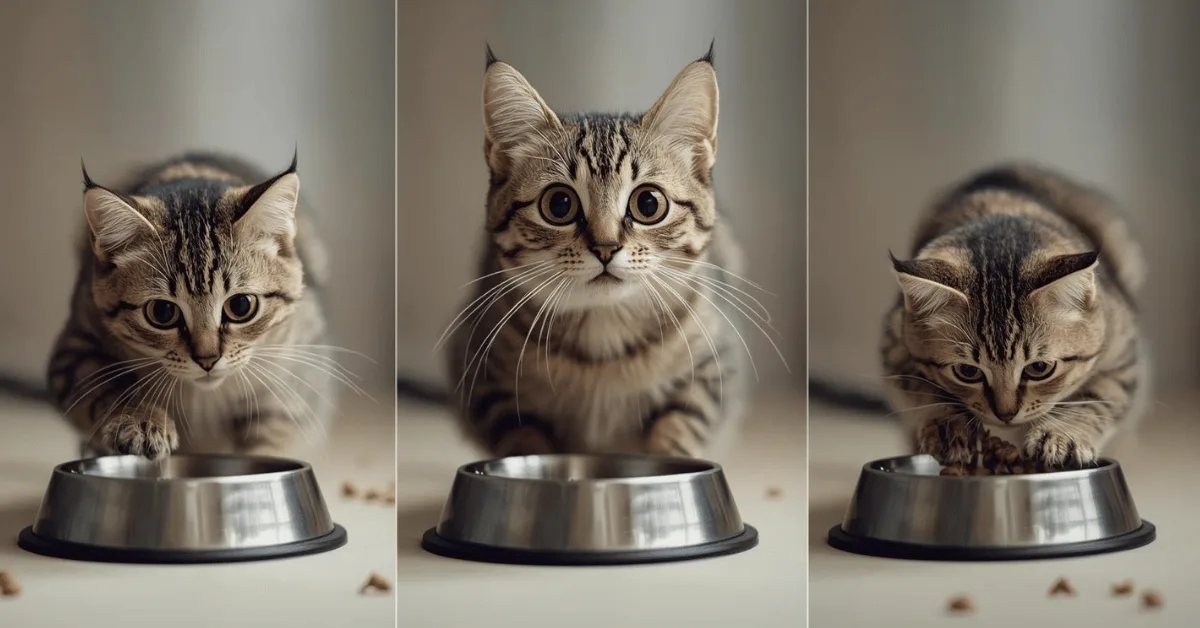

A cat may groom, scratch around its bowl, run through the house, rub against furniture, sleep or ask for more food immediately after eating. Most of these post-meal behaviours reflect normal routines, excitement, scent communication or learned habits.
Repeated vomiting, frequent regurgitation, sudden extreme hunger, mouth pain or a major change in behaviour can point to a health problem. The most useful clues are how often the behaviour happens, whether it has suddenly changed and whether other symptoms appear with it.
Why Cats Behave Differently After Eating
Cats often build predictable routines around food. One cat may wash its face after every meal, while another may run into another room, rub against its caregiver or settle down for a nap.
These actions do not always have one proven explanation. A cat may respond to excitement, the end of a familiar routine, the smell of food, another animal nearby or the expectation of attention.
Owners should compare the behaviour with the cat’s usual pattern. A familiar habit that lasts a few minutes usually means less than a sudden behaviour accompanied by discomfort, appetite changes, vomiting or weight loss.
1. Grooming Immediately After Eating
Many cats begin licking their paws, face, chest or shoulders after finishing a meal. This usually forms part of their normal grooming routine.
Food residue can remain around the lips, chin or whiskers, prompting a brief cleaning session. A cat may lick its paws and then use them to wipe around its face.
When Post-Meal Grooming Is Normal
Normal grooming looks calm and controlled. The cat cleans itself for a short period, appears comfortable and then moves on to another activity.
Some cats repeat this routine after nearly every meal. A consistent habit without skin damage, pain or distress usually does not require intervention.
When Grooming May Signal Discomfort
Pay attention when a cat suddenly paws repeatedly at its mouth, drools, drops food, chews only on one side or becomes reluctant to eat. These signs can occur when the mouth, teeth or gums feel painful.
Frequent biting or licking of one body area can also indicate itching, parasites, allergies, skin irritation or pain rather than ordinary post-meal grooming.
The location and intensity of the grooming matter. Brief face cleaning differs from repeated licking that causes redness, sores or hair loss.
2. Scratching or Pawing Around the Food Bowl
Some cats scratch the floor beside the bowl as though they are trying to bury the remaining food. They may continue even when the floor contains no loose material.
This behaviour is often described as food covering. Several explanations have been proposed: the cat may be attempting to conceal leftovers, save them for later or respond to food it no longer wants. No single explanation applies to every cat.
What the Behaviour Usually Means
A few scratches after eating usually cause no concern. The cat may simply have finished eating and be performing a familiar covering motion.
The behaviour does not necessarily mean that the cat dislikes the food. Some cats scratch after eating meals they normally enjoy, especially when food remains in the bowl.
How to Reduce Excessive Bowl Scratching
Remove uneaten wet food before it spoils and clean the feeding area regularly. Feed measured portions instead of leaving more food than the cat can comfortably finish.
In a multi-cat household, provide separate feeding areas so each cat can eat without interruption or competition. A quiet feeding location may also help a cat that appears tense near the bowl.
Do not punish bowl scratching. Punishment may make the feeding area stressful without changing the reason behind the behaviour.
3. Running or Getting Zoomies After a Meal
A cat may suddenly sprint through the house, leap onto furniture or chase an imaginary target after eating. Owners commonly describe these short bursts of activity as zoomies.
The exact reason does not have one established explanation. Excitement around food, pent-up energy, playfulness or a learned transition from eating to activity may all contribute.
Digestion does not automatically release a sudden burst of energy that explains every case of post-meal zoomies. The behaviour can vary considerably between individual cats.
When Post-Meal Zoomies Are Harmless
Brief running usually causes no concern when the cat moves normally, breathes comfortably and settles down afterward. Young and energetic cats may show the behaviour more dramatically.
Provide safe open space and remove unstable objects that the cat could knock over. Regular interactive play can also provide a controlled outlet for excess energy.
Post-meal running differs from the activity discussed in why cats suddenly zoom around at 3 AM, which focuses on night-time activity patterns rather than behaviour directly connected with eating.
Signs That Suggest Something Else
Watch for frantic running combined with crying, repeated licking around the rear, scooting, vomiting, diarrhoea or visible pain. Those symptoms do not fit ordinary playful zoomies.
A sudden and persistent change in activity may also justify veterinary advice, especially when the cat appears distressed or unable to settle.
4. Rubbing Against People or Furniture
Some cats finish eating and immediately rub their cheeks, head or body against a person, wall, chair or doorway.
Cats commonly rub against familiar people and objects as part of scent communication. Facial rubbing can leave the cat’s scent on its surroundings and may help reinforce familiarity.
When rubbing occurs after eating, the meal may simply act as the predictable point at which the cat approaches its caregiver or moves through a familiar area.
Is Rubbing After Eating a Thank-You?
Owners often interpret the behaviour as gratitude, but it should not be translated literally as a human-style thank-you.
The rubbing may accompany friendly social contact, attention seeking or a familiar feeding routine. A relaxed body, raised tail and gentle head rub usually suggest that the cat feels comfortable.
Some cats also follow the person who provides their food because they associate that person with attention, safety and predictable rewards. The guide explaining why a cat follows its owner everywhere covers that broader behaviour.
5. Sleeping Soon After Eating
A cat that curls up and sleeps after a meal may simply be returning to its normal resting pattern. Cats divide their days into repeated periods of eating, grooming, watching, playing and sleeping.
Eating often occurs at a predictable point in the cat’s routine. Once the meal and grooming end, rest may naturally follow.
Post-meal sleep should not automatically be attributed to one hormone or digestive process. Routine, comfort, activity level, age and the time of day can all influence when a cat rests.
Normal Sleep Versus Lethargy
A sleeping cat usually wakes and responds to familiar sounds, movement, food or gentle interaction.
A lethargic cat may remain unusually weak, move reluctantly, hide, stop eating or lose interest in normal activities. Sudden lethargy accompanied by vomiting, diarrhoea, breathing difficulty or pain requires prompt veterinary attention.
Owners should focus on whether the cat can wake, move and behave normally rather than judging the sleeping position alone.
6. Meowing or Begging for More Food
A cat may finish a complete meal and immediately meow, return to the bowl or follow someone into the kitchen. This does not always mean that the cat needs more calories.
Cats can learn which actions produce a response. Giving extra food whenever a cat meows may teach it that begging results in another meal or treat.
The cat may also want attention, play or access to another area of the home. Some cats ask for interaction at the same time each day because feeding has become part of a larger social routine.
Check Portions Before Offering More
Measure the cat’s complete daily intake, including meals, treats and food offered by other household members. The appropriate amount depends on the cat’s age, size, activity, body condition and health.
Do not repeatedly refill the bowl simply because it looks empty. A cat may finish a correctly measured portion quickly without needing another full meal.
Dividing the daily allowance into several smaller meals may help cats that appear dissatisfied after one or two large servings. Puzzle feeders can also slow eating while adding mental stimulation.
When Constant Hunger Needs Attention
Contact a veterinarian when increased appetite appears suddenly or continues alongside weight loss, vomiting, diarrhoea, excessive thirst, increased urination, restlessness or poor coat condition.
Hyperthyroidism commonly affects mature and older cats and can cause increased appetite despite continuing weight loss. Diabetes, parasites and other health problems can also alter appetite.
Persistent hunger should not be treated only as a behavioural issue when the cat’s weight, thirst, energy or bathroom habits have changed.
7. Regurgitating or Vomiting After Eating
Bringing food back up after a meal is the most important behaviour in this list to describe accurately. Vomiting and regurgitation are not the same process.
What Regurgitation Looks Like
Regurgitation usually happens passively and often occurs shortly after eating or drinking. The cat may lower its head and bring up undigested food without obvious retching or strong abdominal contractions.
The material may look similar to the original food and can sometimes appear tube-shaped.
Regurgitation can occur after rapid eating, but repeated episodes should not automatically be blamed on eating speed. Oesophageal disease and other medical problems can produce a similar pattern, so frequent regurgitation requires veterinary assessment.
What Vomiting Looks Like
Vomiting is an active process. A cat may lick its lips, salivate, repeatedly swallow, retch and contract its abdomen before bringing up food, liquid, bile or foam.
Possible causes include dietary changes, spoiled food, parasites, inflammation, toxins, foreign objects and underlying illness. The appearance of the vomit alone cannot confirm the cause.
When a cat may have reached medication, chemicals, plants or unsuitable human food, check the guide to foods, plants and household items that are toxic to cats. Do not induce vomiting or give a home remedy unless a veterinarian provides specific instructions.
The separate article on whether cats can eat raw eggs explains that individual food-safety question without overlapping this broader post-meal behaviour guide.
Can a Slow Feeder Help?
Once a veterinarian has ruled out an underlying problem, smaller measured meals or a cat-safe slow feeder may help a healthy cat that regularly gulps its food.
Introduce a new feeder gradually and confirm that the cat can still eat comfortably. Some cats may become frustrated by a feeder that makes food unnecessarily difficult to reach.
Do not depend on a slow feeder when food repeatedly comes back up. Record when the episode occurs and, when possible, take a video for the veterinarian.
The visible effort, timing and appearance of the material can help a veterinarian distinguish vomiting from regurgitation.
How to Make Mealtimes Calmer
A few practical changes can reduce feeding stress and make unusual behaviour easier to interpret:
- Feed measured portions on a consistent schedule.
- Divide the daily allowance into smaller meals when appropriate.
- Keep food and water bowls clean.
- Place food away from litter trays and noisy appliances.
- Separate cats that compete or guard food.
- Introduce a new diet gradually unless a veterinarian advises otherwise.
- Use puzzle feeders or slow feeders only when the cat can use them comfortably.
- Record repeated vomiting, regurgitation or unusual behaviour.
- Avoid offering extra food every time the cat vocalises.
Change one part of the feeding setup at a time. Several simultaneous changes make it difficult to identify which adjustment helped or worsened the behaviour.
When Should You Call a Veterinarian?
This guide explains common behavioural possibilities and does not replace an examination or diagnosis from a veterinarian.
Arrange veterinary advice when the behaviour represents a sudden change or repeatedly disrupts eating. Seek prompt help when it occurs with:
- Repeated vomiting or regurgitation
- Blood in vomit
- Inability to keep food or water down
- Loss of appetite
- Unexplained weight loss
- Severe weakness or unusual tiredness
- Diarrhoea
- Abdominal pain or swelling
- Difficulty breathing
- Excessive thirst or urination
- Suspected toxin or foreign-object ingestion
- Drooling, mouth pain or difficulty swallowing
A single familiar quirk may be harmless, but several symptoms occurring together can indicate a medical problem.
What a Cat’s Post-Meal Routine Usually Means
Most unusual behaviour after eating forms part of a cat’s individual routine. Grooming, rubbing, resting, scratching near the bowl and brief bursts of activity often occur without illness.
The most important question is not whether the behaviour looks strange. Owners should consider whether it is new, frequent, worsening or accompanied by changes in appetite, weight, energy or digestion.
Recognising that difference helps owners enjoy harmless feline habits while responding quickly when a cat genuinely needs veterinary care.
Frequently Asked Questions
Why does my cat run around immediately after eating?
The exact reason remains uncertain. Excitement, pent-up energy, playfulness or a learned transition from feeding to activity may contribute. Brief zoomies are usually harmless when the cat shows no pain, breathing difficulty or digestive symptoms.
Why does my cat scratch the floor after eating?
The cat may be performing a food-covering motion, attempting to conceal leftovers or responding to food it no longer wants. Occasional scratching is usually normal, but sudden excessive scratching combined with reduced appetite deserves attention.
Why does my cat clean itself after every meal?
Many cats include face and paw cleaning in their regular post-meal routine. Repeated mouth pawing, drooling, difficulty chewing, bald patches or skin damage can indicate discomfort rather than normal grooming.
Why does my cat beg for food after it has eaten?
The cat may have learned that vocalising produces food or attention. Check the complete daily portion before offering more. Persistent hunger accompanied by weight loss, excessive thirst or other symptoms requires veterinary evaluation.
Why does my cat bring up undigested food after eating?
Passive expulsion of undigested food soon after a meal may be regurgitation rather than vomiting. Rapid eating can contribute, but repeated episodes should be assessed by a veterinarian.

3 thoughts on “7 Strange Things Cats Do After Eating and What They Mean”